Why Kansas City Winters Are Tougher on Garage Floors Than Homeowners Realize
Most Kansas City homeowners know winter is hard on outdoor concrete — driveways crack, sidewalks scale, and pool decks need attention every spring. What fewer homeowners realize is that the garage floor often takes equally severe damage through winter, even though it’s inside and technically protected from the weather.
The way Kansas City’s specific winter conditions interact with bare concrete garage floors is a slow process that’s easy to underestimate year by year. By the time the damage becomes visually obvious, it’s often been accumulating for several seasons. Garage floor coating Kansas City from Kansas City Concrete Artisans interrupts that process — protecting the concrete from the specific agents that Kansas City winters introduce while delivering a durable, attractive surface that holds up for years.
The Salt Problem: What Comes in on Your Tires Every Winter
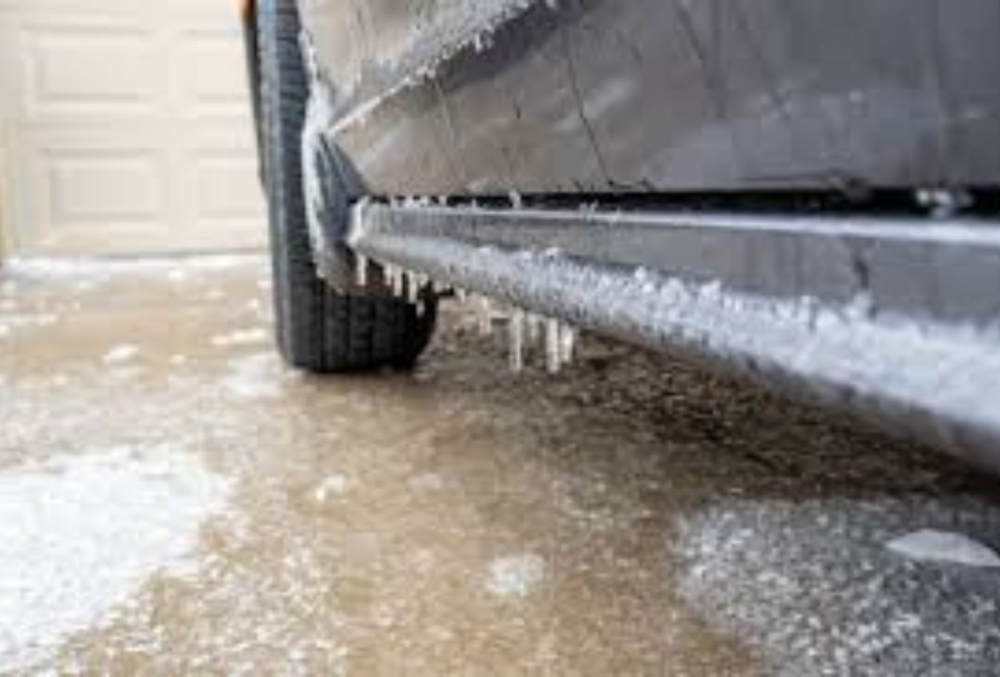
The primary driver of garage floor damage in Kansas City winters isn’t cold temperatures directly — it’s road salt and deicing chemicals. The Kansas City metro applies deicing agents heavily to roads, parking lots, and driveways from November through March. Every vehicle that enters your garage during that period brings salt-contaminated slush, water, and chemical residue directly onto your garage floor.
Salt on concrete does two things. First, it lowers the freezing point of water, allowing moisture that has penetrated the surface to remain liquid at lower temperatures before freezing. When that moisture eventually does freeze, it expands inside the concrete with greater force because it’s penetrated more deeply than plain water would. Second, salt initiates a chemical reaction with concrete that degrades the calcium silicate compounds that give concrete its strength — a process called chloride attack, which causes gradual but significant long-term weakening.
Neither of these processes is visible while it’s happening. The garage floor looks fine. Then one spring, you notice the surface is rougher, small patches are flaking, and the gray has taken on a whitish, chalky quality in certain areas. That’s the visible result of several winters of salt damage — and it will continue and accelerate without intervention.
Freeze-Thaw Cycles Don't Stop at the Garage Door
Garages in Kansas City are not fully climate-controlled spaces. An attached garage connected to a heated home stays somewhat warmer than outdoor temperatures, but it still experiences significant temperature swings during winter — particularly in the morning when the garage door opens to an outside temperature well below freezing, and during the shoulder seasons when overnight lows drop below freezing while daytime highs climb well above it.
Those temperature swings create freeze-thaw cycling within the garage floor itself, particularly when the salt-contaminated moisture from tracked-in road slush has penetrated the surface. The result is the same mechanical expansion damage that cracks outdoor concrete — just slightly slower in progression because the garage stays warmer than fully exposed outdoor surfaces.
For detached garages or those with inadequate insulation, the freeze-thaw effect on the floor can be as severe as any outdoor concrete surface on the property.
Why Bare Concrete Can't Win This Fight
The fundamental issue is that bare concrete was never designed to serve as a finished garage floor surface in a climate like Kansas City’s. It’s a structural material. As a finished surface, it’s porous, pH-sensitive (which makes it reactive to salt), and not designed for repeated chemical exposure and freeze-thaw cycling.
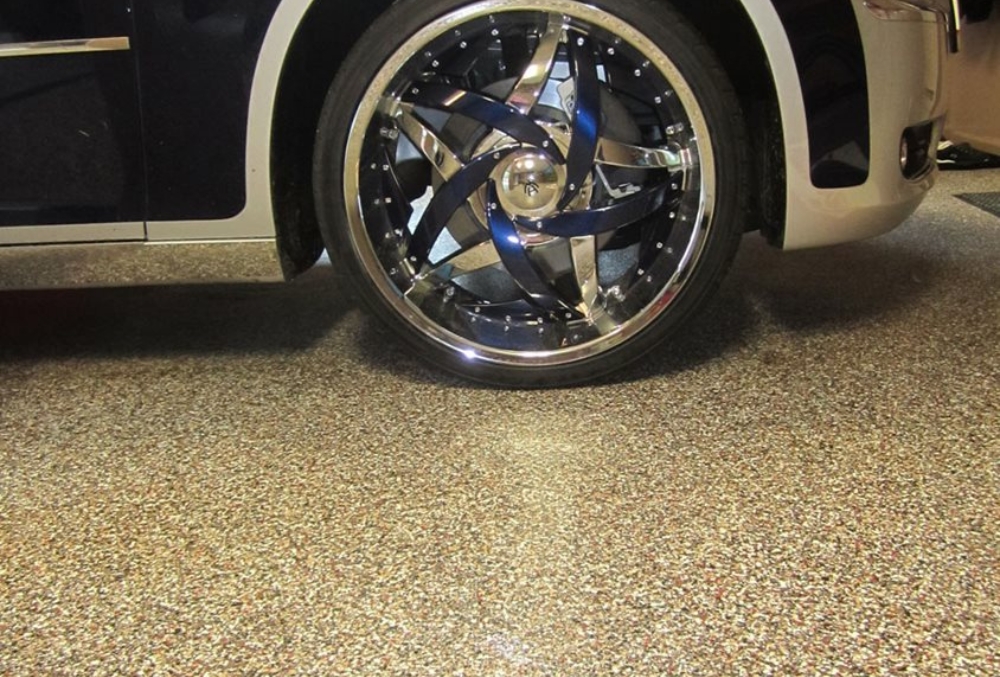
A properly applied garage floor coating changes the equation entirely. Epoxy and polyurea polyaspartic coating systems create a sealed, non-porous surface that salt cannot penetrate and moisture cannot infiltrate. The chemical resistance built into quality garage coatings means that even concentrated deicing residue sitting on the surface through multiple freeze-thaw cycles doesn’t reach the concrete beneath.
Kansas City Concrete Artisans installs both epoxy floor coating systems and fast-cure polyurea polyaspartic systems for Kansas City garage floors — with polyaspartic being the preferred option for properties that need to return to use quickly, since the system can often be installed in a single day and reaches full cure significantly faster than traditional epoxy.
The full picture of what Midwest weather does to uncoated garage floors over a multi-year period is worth understanding in detail — our piece on Midwest weather and garage floor damage covers the longer-term progression and helps homeowners understand what stage their floor may currently be in.
Protect Your Floor Before This Winter
The best time to coat a garage floor is before the damage accumulates, not after. Call Kansas City Concrete Artisans at (816) 307-0325 or request a free garage floor estimate online to schedule an assessment before winter arrives. We serve Overland Park, Lee’s Summit, Independence, Shawnee, Blue Springs, and surrounding communities throughout the Kansas City metro